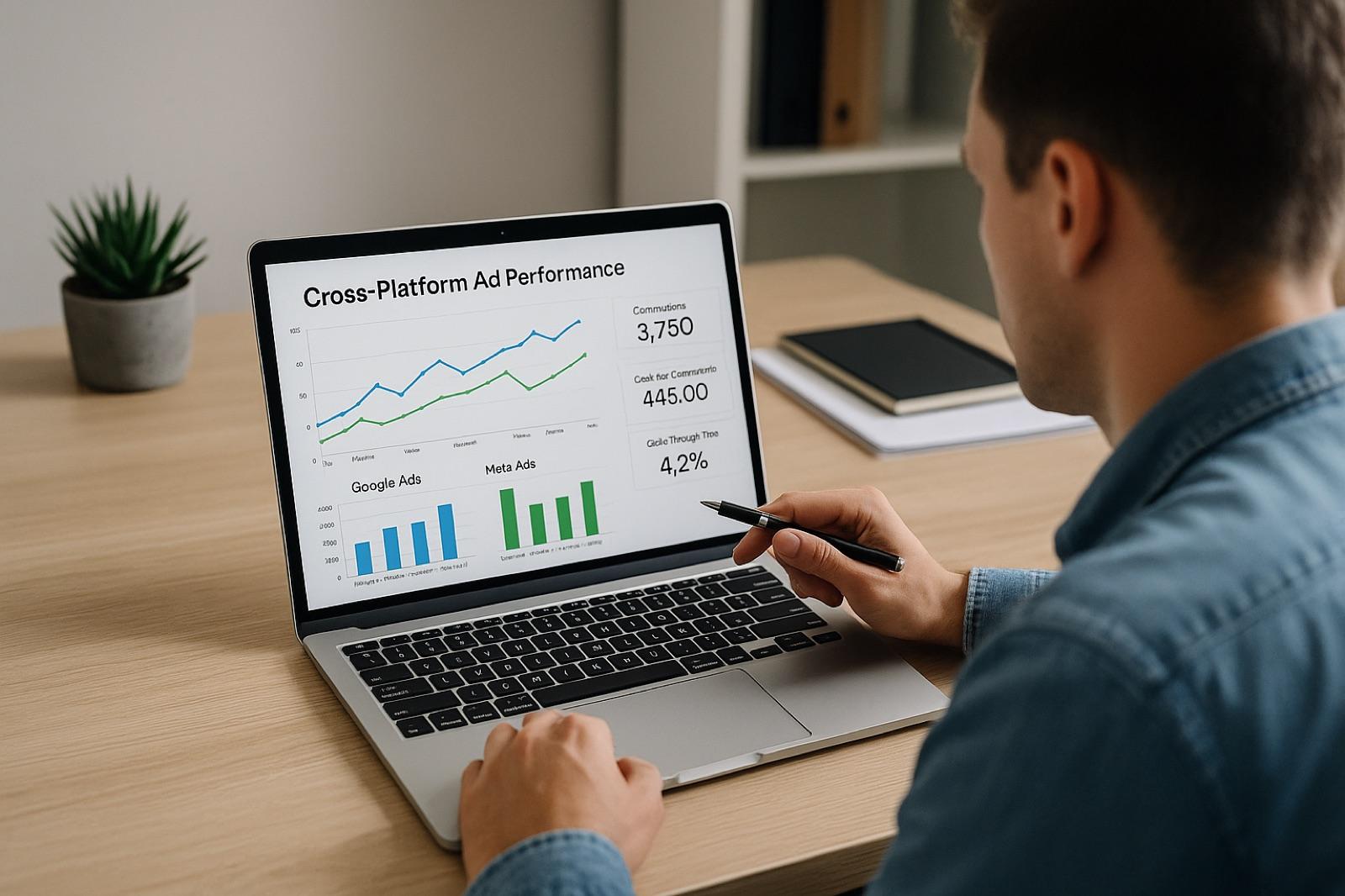
For B2B brands, Google Ads is often the go-to channel for capturing high-intent buyers. But even the best campaigns leave opportunities on the table. Meta retargeting lets you re-engage prospects who clicked away before converting and keeps your brand top of mind until they are ready to buy. Here is why B2B brands that advertise mainly on Google should add it.
The case for multi-channel retargeting in B2B
Single-channel dominance is over. B2B buyers usually consume many pieces of content before they make a purchase decision. If you only show up in one channel, you leave an open lane for competitors to win your prospects.
Google captures high-intent traffic. Meta is where you can nurture that interest and shape how your brand is perceived.
How Google and Meta work together
Think of Google as the handshake and Meta as the follow-up conversation.
- →Google Ads captures intent when someone is actively searching for your product or service.
- →Meta retargeting reinforces your message visually, reminds prospects about your offer and addresses objections while they scroll.
The result is more trust, more familiarity and a better chance of being remembered when they are ready to sign.
Why Meta retargeting is especially valuable for B2B
Meta's delivery system is very good at reaching people you have already identified as potential customers. For B2B, that means you can:
- →Re-engage warm traffic with tailored ads for people who visited high-value pages such as pricing, case studies or product demos.
- →Shorten the sales cycle by staying top of mind through a long buying process.
- →Reach multiple stakeholders at the same company, even if they were not the original searcher.
- →Show thought leadership with video, carousels and testimonials that build trust over time.
Cost efficiency compared with Google
Google Ads is often expensive in B2B because keywords are competitive. Meta retargeting lets you keep prospects engaged for a fraction of the cost per click while staying relevant.
Building a high-ROI Meta retargeting strategy
Step 1: segment your retargeting audiences
Do not lump everyone together. Create separate campaigns for:
- →Pricing page visitors.
- →Blog readers.
- →Past converters, for upsell or cross-sell.
- →People who abandoned the demo form.
Step 2: tailor your creative
Match the creative to the prospect's stage in the buying journey.
- →Early stage: educational content such as whitepapers or webinars.
- →Mid stage: case studies and product tours.
- →Late stage: limited-time offers and consultation invites.
Step 3: manage frequency and budget
Too many impressions cause ad fatigue. Aim for a frequency of 5 to 7 per month per audience. Start by allocating 10 to 20 percent of your Google Ads budget to Meta retargeting and adjust based on performance.
Example: a B2B SaaS brand
One of our SaaS clients was running Google Search campaigns for lead generation and added Meta retargeting to reach past site visitors. Within three months:
- →Lead volume increased by 34 percent.
- →Cost per lead dropped by 18 percent.
- →The sales cycle shortened by two weeks.
The key was showing targeted video testimonials and product demos to decision-makers who had already engaged through Google search clicks.
Measuring success across channels
To understand the full impact of Meta retargeting, track:
- →Assisted conversions in Google Analytics.
- →View-through conversions in Meta Ads Manager.
- →Lift in branded search queries after retargeting campaigns start.
The goal is not only direct conversions from Meta, but the overall lift in performance across both platforms.
Common mistakes to avoid
- →Using the same creative for every audience. Different segments need different messages.
- →Forgetting to exclude converters, which wastes budget on people who already bought.
- →Ignoring attribution windows. Understand how long prospects take to convert and set retargeting windows accordingly.
Conclusion
For B2B brands investing heavily in Google Ads, Meta retargeting is a competitive advantage. Staying visible across platforms increases touchpoints, builds trust and lowers acquisition costs. In a crowded market, the brands that win are the ones that do not let warm leads go cold.
Key takeaways
- →Meta retargeting extends the impact of Google Ads by re-engaging people who did not convert.
- →B2B buying cycles need multiple touchpoints across channels.
- →Visual storytelling on Meta builds familiarity and trust with decision-makers.
- →Cross-channel retargeting can raise conversion rates and lower overall acquisition costs.
FAQs
How long should I retarget a prospect on Meta after they click a Google ad?
For B2B, a 30 to 90 day window is typical, depending on the length of your sales cycle.
Should I use the same offers on Meta as on Google?
Not always. Meta is better for nurturing with softer calls to action such as educational resources, while Google captures bottom-of-funnel searches.
Will Meta retargeting work if my prospects are mainly on LinkedIn?
Yes. Decision-makers use Meta platforms in their personal time, which makes Meta a cost-effective complement to LinkedIn.
What content works best for B2B retargeting on Meta?
Testimonials, product demos and thought leadership content tend to build the most trust.
How do I know if Meta retargeting is helping my Google campaigns?
Use assisted conversions in Google Analytics and compare performance before and after retargeting starts.